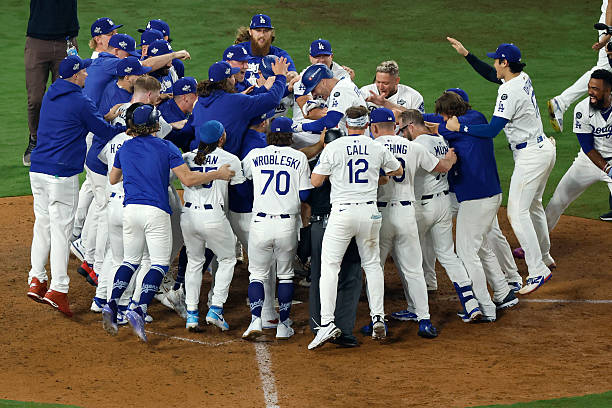
📢 TOP STORY: Edwin Díaz didn’t just sign with the Dodgers, he picked the smartest offer—here’s what his contract truly tells you ⚡.NL

On paper, it’s a three-year, $69 million deal that resets the closer market. But Jon Heyman’s breakdown shows how intentionally the Dodgers structured it: a $9 million signing bonus, plus annual salaries of $14 million (2026), $23 million (2027), and $23 million (2028), with $4.5 million deferred each season. There’s also a conditional team option for 2029 worth $6.5 million, and performance escalators in 2029 that pay $750K for 45 games finished and another $750K for 50, plus $1 million if he reaches 55 games finished.

That’s not just “Dodgers spend big again.” That’s a contender using every lever—cash flow, deferrals, upside triggers—to make the player feel taken care of while keeping the organization’s flexibility intact.
The Contract Tells You What Díaz Wanted
Díaz could have chased pure length. Instead, he chased elite money with elite context—and this structure delivers both.
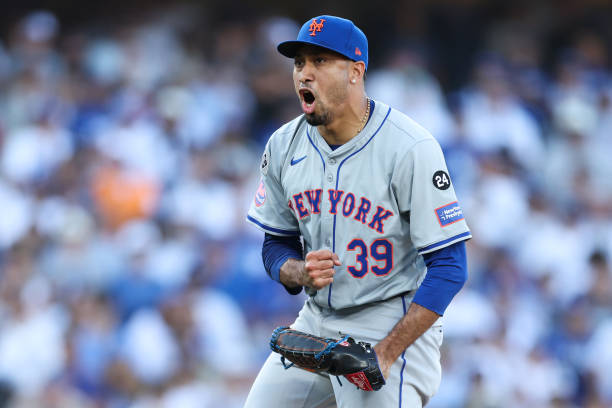
The headline number matters: $69 million over three years makes Díaz the highest-paid reliever on an annual basis, and the signing bonus puts real money in his pocket immediately. The deferrals—$4.5 million per year—help Los Angeles keep the present-day payroll cleaner while still paying Díaz like the premier ninth-inning weapon he believes he is.
And then there’s the 2029 layer. The Dodgers didn’t just tack on a generic option—they attached a conditional option and games-finished bonuses that basically say: If you’re still closing at a high volume, you’ll get rewarded again. That’s a smart fit for a 31-year-old closer (32 in March) who wants to win now, but also wants a runway if he keeps dominating.
Los Angeles Sold The Whole Plan
Díaz made the simplest part public at his introductory press conference: he chose the Dodgers because he’s “looking to win,” calling them a winning organization and saying the decision became “pretty easy.”
That’s not empty talk if you zoom out. The Dodgers were defending champs, but their bullpen didn’t play like one for long stretches in 2025—a 4.27 reliever ERA and 27 blown saves, numbers that left them scrambling for stability until October forced creativity.
Díaz brings the kind of clarity they didn’t consistently have: a true ninth-inning hammer with recent dominance. In 2025 with the Mets, he posted a 1.63 ERA, 28 saves in 31 chances, and 98 strikeouts in 66.1 innings—the exact résumé that makes teams stop mixing and matching and start shortening games again.
The Mets’ context matters, too. Díaz opted out of the remaining money on his previous deal after the 2025 collapse, and New York pivoted by signing Devin Williams—proof the market moved fast once Díaz hit it.
So yes, Díaz picked the Dodgers because he wants rings. But Heyman’s contract details show the other truth: Los Angeles made it easy to choose them—top-of-market status, immediate cash, smart long-term upside, and a roster built to make every ninth inning mean something.