Rookie Standout Isaac Collins Sparks Hope, Yet Brewers Still Wonder About Their Outfield Plan .MH

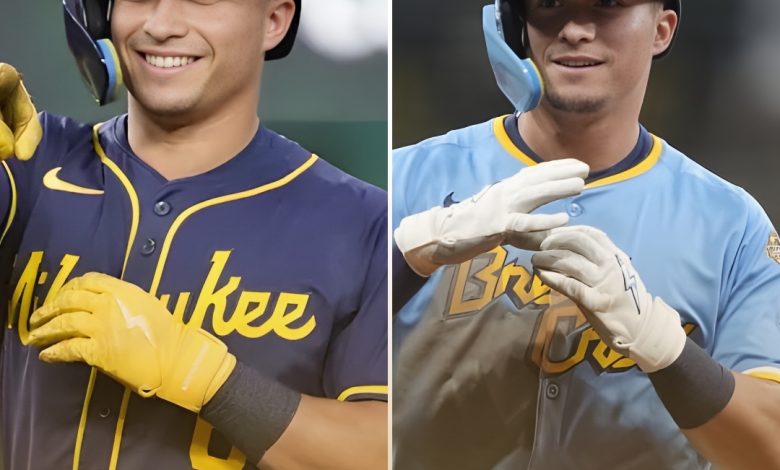
For most of this season, Isaac Collins was a bona fide contender for National League Rookie of the Year. Through August, the 28-year-old hit .274/.371/.425 (126 wRC+) and tied Drake Baldwin for the most fWAR (2.5) among NL rookies.
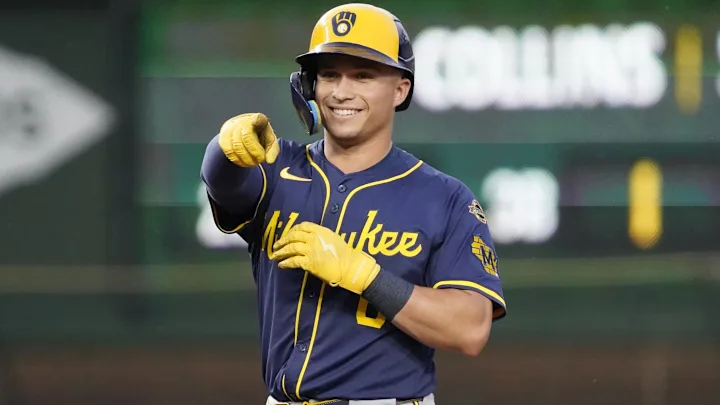
Yet, by the time October rolled around, Collins had been effectively relegated to a bench role. He received just 58 plate appearances in September, his fewest in a month since April, and started just one of Milwaukee’s nine playoff games.
That was partially due to the emergence of Jake Bauers, who posted an OPS north of 1.000 in September and whose bat has always carried more upside. However, Collins’s production waned during that same stretch, as he hit just .191/.345/.319 (97 wRC+) during the regular season’s final month. He only reached base once via a walk in 10 postseason plate appearances.
After the Brewers’ season ended, Pat Murphy reinforced that they saw what Collins is capable of, but would not commit to giving him a significant enough role in 2026 for him to bounce back closer to that form.
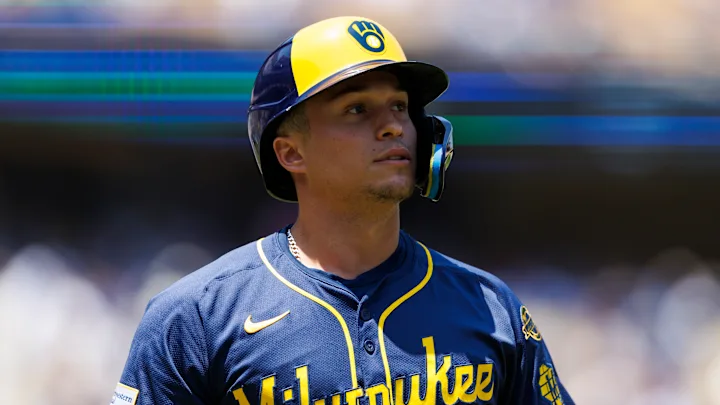
“You have to get that opportunity,” Murphy said. “The key for him is going to be, does he get the opportunity to do that? If he does, I think he’ll be even better because he’s a student of the game and he’s aware of what makes him good.”
Collins is a microcosm of Milwaukee’s 2026 outfield picture. It’s a deep group of athletes with the tools to be regulars but uncertain outlooks. Sal Frelick and Jackson Chourio are locked into starting roles; flanking them on the depth chart are Collins, Bauers, Garrett Mitchell, Blake Perkins, Tyler Black, Brandon Lockridge, and Steward Berroa, each of whom comes with questions.
The concern surrounding Collins is the legitimacy of his breakout performance. His excellent plate discipline and swing decisions are no fluke, but his hitting ability looks less reliable. While Collins’s 122 wRC+ and .344 wOBA were third among NL rookies with at least 350 plate appearances, his 99 DRC+ and .319 xwOBA suggest he performed more like a competent hitter with batted ball luck on his side than a truly good one. His future production largely hinges on repeating a 20.4% pull air rate that helped him post better power numbers than his quality of contact would typically yield.
His actual level of talent in the field is also uncertain. Collins looked like a Gold Glove candidate for much of the year, accruing a Fielding Run Value of 5 through July by using his instincts as a former infielder to get great jumps in left field. Across August and September, though, he limped to a -5 Fielding Run Value as poor routes became more detrimental to his defensive efficiency down the stretch.
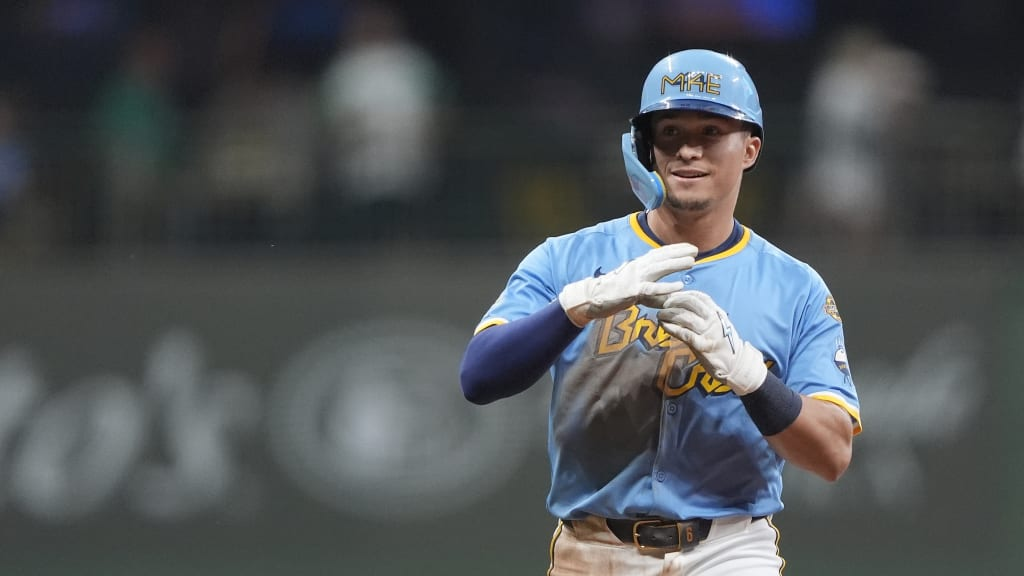
If Collins projects as an on-base specialist with little pop who plays unremarkable corner outfield defense, it should force the Brewers to reconfigure their outfield. Internal shuffling could mean more starts for Bauers and Mitchell, but there’s an argument to be made that the club would benefit from bringing in a right-handed outfield bat to offer more stable offense than Lockridge or the switch-hitting Berroa.
Collins has three minor-league option years remaining, so the Brewers could send him to Triple-A should they decide there is no suitable role for him on the 26-man roster. It may not come to that – even if his 2025 proves mostly a fluke, he could still be useful off the bench – but they should be keeping their options open in the outfield.