Jeff Kent’s Hall of Fame Journey: The Quiet Competitor Whose Houston Chapter Helped Shape His Legacy. DD


For more than two decades, Jeff Kent remained one of Major League Baseball’s most intriguing figures. He didn’t seek attention, didn’t embrace theatrics, and never tried to fit into the traditional mold of a superstar. Instead, he let production speak for him — and few players spoke louder at second base.
In 2026, the Hall of Fame doors finally opened for Kent, giving long-awaited recognition to a career built on durability, power, and relentless competitiveness. His story stretches across several franchises, but one brief stop — his two seasons with the Houston Astros — played a subtle yet meaningful role in solidifying his lasting impact.
A Career Defined by Consistency and Power

Jeff Kent’s numbers stand alone, even without narrative or nostalgia attached to them.
With 377 home runs, he remains the most prolific power hitter in MLB history at his position. His 1,518 RBIs underscore how essential he was to every lineup he joined. Add a .290 career average, five All-Star appearances, four Silver Sluggers, and the 2000 NL MVP award, and the picture becomes clear: Kent belonged among the best.
His offensive production didn’t come in waves or dramatic breakout seasons. It came year after year, across 17 seasons, in ballparks and eras that changed around him. Kent never changed his approach — and that steadiness is what ultimately cemented his Hall of Fame case.
Houston: A Short Stay That Mattered More Than Expected

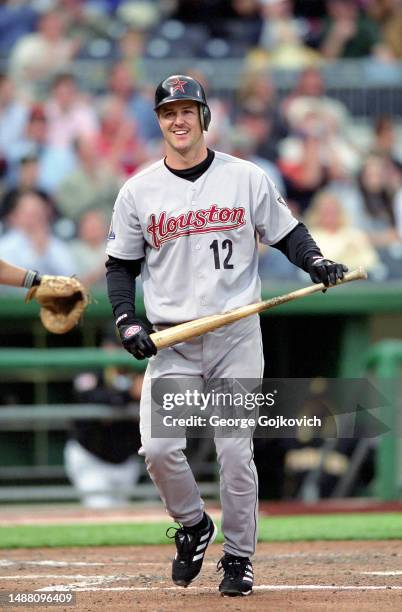
Kent’s time with the Houston Astros (2003–2004) often gets overshadowed by his MVP years in San Francisco — but it shouldn’t.
Houston offered him something rare late in a career: opportunity paired with relevance. Surrounded by a strong veteran core, Kent became a crucial middle-order presence, delivering nearly 50 home runs during his stay and providing a level of reliability that the Astros needed during a pivotal transitional period.
His defining moment came in the postseason — the dramatic walk-off three-run homer in Game 5 of the 2004 NLCS. It wasn’t just a great swing; it was a statement. Even in the twilight of his career, Kent remained a force capable of shifting a playoff series.
The Astros ultimately fell short that year, but Kent’s impact lingered. For many fans, his brief tenure felt like an era of unfinished potential — a stretch where Houston came close to rewriting its own franchise history.
Understanding the Delay: Why Recognition Took Time
Despite numbers worthy of first-ballot consideration, Kent’s road to the Hall was anything but simple.
Writers hesitated, weighed intangibles, and scrutinized everything from his defensive metrics to his temperament. Kent, famously direct and unapologetically private, never catered to media narratives, and for years, that overshadowed objective evaluation.
But the evolution of Hall of Fame voting — particularly the expanded role of reevaluation committees — made space for context, nuance, and fairness. These panels recognized what many statistical analysts had argued for years: Kent’s offensive production at second base is historically rare and deserves acknowledgment at Cooperstown.
A Legacy Built Across Cities, Eras, and Expectations
Jeff Kent’s story continues to resonate because it’s layered. He was not the stereotypical superstar, nor did he embrace the spotlight. He played with intensity that sometimes clashed with perception, yet his commitment to winning never wavered.
From San Francisco to Houston to Los Angeles, every chapter added something: power, leadership, postseason drama, and quiet consistency. His approach may not have always fit baseball’s expectations, but it redefined what the sport could expect from a second baseman.
His Hall of Fame induction is not just a celebration of numbers — it’s an acknowledgment of a player who reshaped his position through perseverance and performance.
SEO-Friendly Summary (subtle & natural)
This feature article explores Jeff Kent’s long-awaited Hall of Fame induction, his historic offensive accomplishments, the importance of his Houston Astros years, and the reasons behind his delayed recognition. It provides a well-rounded narrative for readers interested in Jeff Kent’s legacy, his Astros tenure, and his Hall of Fame case, written in a way that aligns smoothly with common search queries without appearing SEO-heavy.