An orthopedic surgeon reveals the little-noticed injury detail that could quietly define Patrick Mahomes’ recovery timeline for the Chiefs.QQ

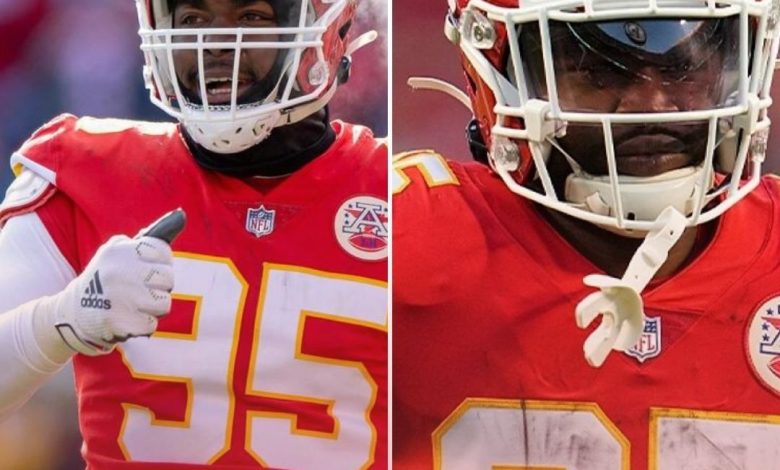
Kansas City Chiefs QB Patrick Mahomes’ knee injury also included an avulsion injury, which is a fracture where the ligament meets bone.
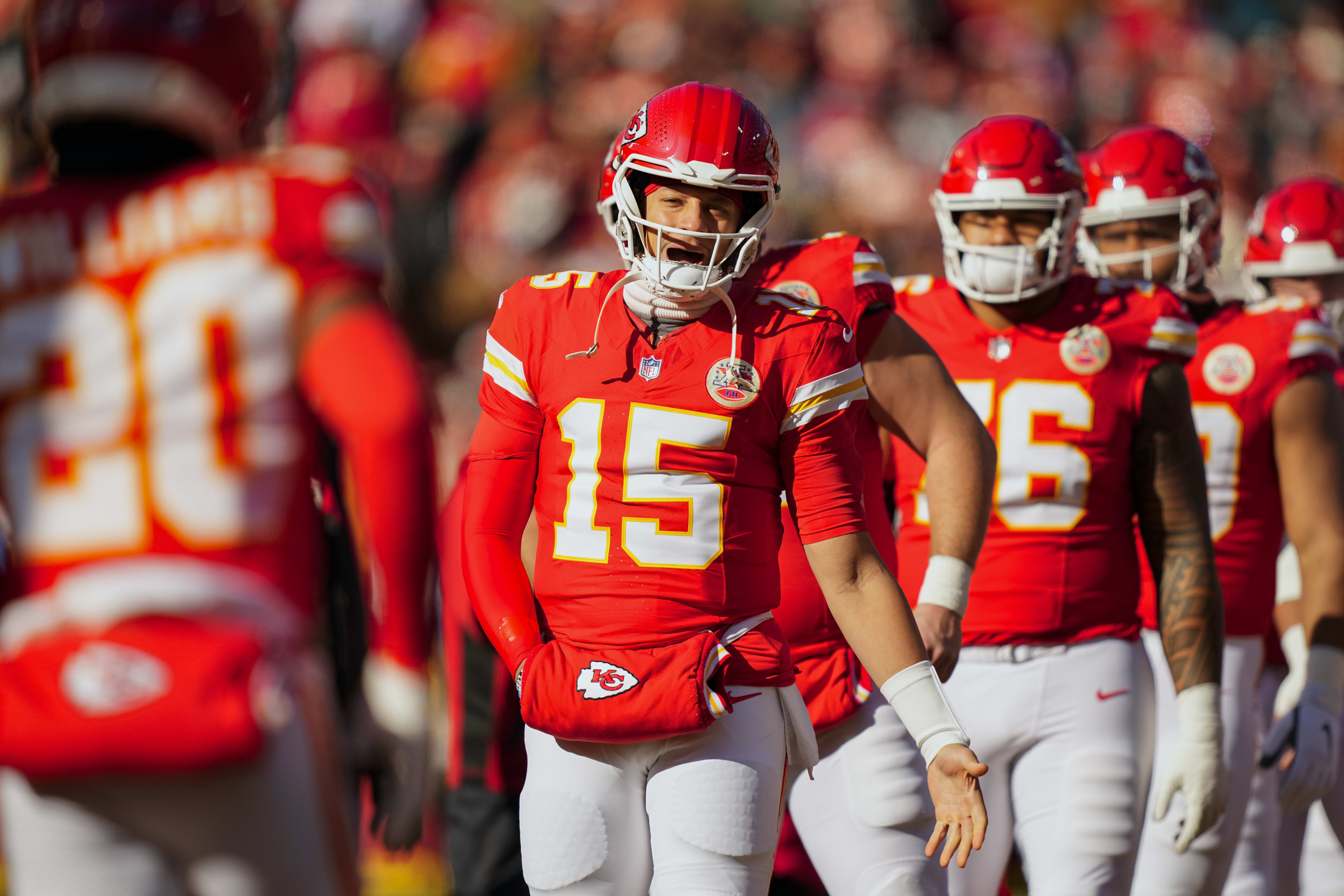
Kansas City Chiefs QB Patrick Mahomes’ knee injury is more complex than the initial reporting may have suggested, and one overlooked detail could ultimately shape his recovery timeline and his ability to return for the 2026 NFL season.
The Chiefs initially announced that MRI imaging revealed Mahomes had sustained a torn Anterior Cruciate Ligament (ACL). It was then announced that he would seek a second opinion with Dr. Daniel Cooper in Dallas, Texas. After consulting with Dr. Cooper, Mahomes had surgery to repair his ACL and Lateral Collateral Ligament (LCL), but there’s even more to this injury than just those ligaments.
Why the Long Week Could Save the Colts
When Chiefs VP of Sports Medicine and Performance Rick Burkholder spoke to the media on Wednesday, he revealed several small details about Mahomes’ injury. He mentioned the Posterolateral Corner (PLC), a cluster of ligaments and tendons that includes the LCL. One of the other details Burkholder mentioned flew well under the radar, but stood out to me as significant.
Burkholder said that the reason Mahomes had surgery quickly was to “reattach the avulsion injury.”
I’d heard no mention of that particular injury before that moment. So what exactly is an avulsion injury, and what does it mean to Mahomes’ injury outlook? To learn more about this particular injury, I spoke with Dr. Matt Anderson, an orthopedic surgeon specializing in sports medicine at the Bone and Joint Institute of Tennessee.
Chiefs QB Patrick Mahomes’ avulsion injury is an overlooked detail that could impact recovery
An avulsion injury (in this case) describes when the Lateral Collateral Ligament (LCL) forcefully pulls away from its attachment point, fracturing a small piece of bone with it. This injury most frequently occurs at the head of the fibula (as opposed to the head of the femur). So, Mahomes’ LCL injury also doubles as a bone fracture.
I asked Dr. Anderson whether that aspect of the injury was rare and whether it could complicate things. From the sound of it, this was likely preferred over the other ways you could tear or damage an LCL.
“No, not really,” Dr. Anderson explained. “I would say, when you injure a ligament, you can actually either completely tear the ligament substance itself, or sometimes the ligament stays intact, and it pulls off the piece of bone that it attaches to. And that’s what an avulsion fracture is. So, it’s just kind of a different way in which the ligament can be injured. And then the nice thing about the avulsion fracture is that the ligament itself, for the most part, is still healthy and still intact. So, that’s why you can do a repair where you keep the person’s native ligament, in this case, the LCL. You just repair it back to the bone.
“And then if that torn ligament has a fragment of bone that you can kind of keep because it’s viable and healthy, then you actually get some bone healing to bone, and that tends to happen a little bit faster than getting ligament or soft tissue to heal to bone. So, if you’re going to, you know, it’s actually not a bad thing to have an avulsion fracture, and that’s probably why they repaired it, and that’s probably at least part of the reason why there was some urgency in doing it, because if you don’t repair an avulsion fracture relatively quickly, within typically two weeks or so, the ability to repair it goes down. Then you’re forced to do a reconstruction.”
So, the good news is that Mahomes’ LCL ligament is likely healthy, and he’s looking at bone-to-bone healing, rather than tissue graft to bone. An initial concern upon hearing the word “fracture” is the possibility of other associated injuries, even beyond the ligament damage we already know is present. Burkholder announced that Mahomes’ injury didn’t include any nerve damage, which was notable because of where this particular knee injury occurred.
Basically, things could’ve been a lot worse for Mahomes.
“The bone itself is attached to the ligament, so it’s not free floating, typically,” Dr. Anderson said. “But wherever it kind of ends up is where it will scar in. So you want it to scar into the right place. And the LCL is actually right next to a really important nerve called the perineal nerve, which basically allows you to bring your foot and your ankle off the ground. So, if you have an injury to that or scar tissue that involves a perineal nerve, for anybody, it can be a major issue, let alone a professional athlete. So, that is definitely a concern with the LCL injury.”
Chiefs QB Patrick Mahomes’ long-term outlook is not impacted as much as the initial recovery
The next four to six weeks will be the toughest for Mahomes because of the nature of knee injuries with concurrent ligament repairs/reconstructions. An isolated ACL injury leads to a different initial recovery process than injuries that involve the LCL, PLC, or an avulsion injury.
“So, for a typical isolated ACL tear that requires a reconstruction, the overall recovery that we always quote before you’re fully cleared for contact or collision sports with no restrictions, the typical number we quote is nine months,” Dr. Anderson said. “And when you add in an LCL injury, a possible posterior lateral corner (PLC) injury, you know, it can delay that recovery initially, but typically, the overall recovery is usually still nine to 10 months.
“And so what I mean is that, say you undergo an LCL repair or reconstruction, you might not be able to put full weight on it, so you might have what’s called protected weight-bearing or partial weight-bearing, and it’s usually for four weeks or so. As opposed to an isolated ACL reconstruction, most surgeons actually let patients walk on it and put full weight on it right away. So, these additional ligaments that were potentially injured, the LCL, the posterior lateral complex, can make the first few months of the recovery maybe a little bit slower. But big picture, I don’t think it will change his overall recovery in terms of return to competition.”
You might recall some words about Mahomes the patient from Chiefs athletic trainer Julie Frymyer, in the “Quarterback” documentary series on Netflix.
“He’s an impatient patient,” Frymyer said. “As much as he attacks everything on the football field, that’s how he attacks life, that’s how he attacks rehab. That’s how he attacks anything in treatment. He expects everything to be better quickly. In working with him, you have to really be on your toes. Those things turned around really quickly for him.”
In the early goings of his recovery, the training staff may have to protect Mahomes from himself and preach patience. That way, everything can heal properly on the front end of the recovery. In turn, that could make the recovery timeline on the backend exactly where everyone wants it.
Nine months from his surgery date would put Mahomes cleared around Sept. 14, which aligns with Week 1 of the 2026 NFL season. If he ended up on the more extended range here, we’d be looking at around Oct. 14, which would put him around a Week 5 or Week 6 return.