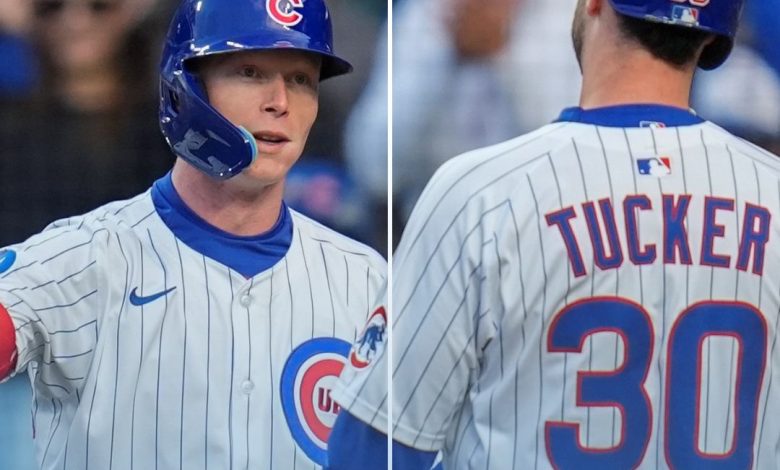
DEPARTURE OF KYLE TUCKER AND LACK OF ACE LEAVES CLUB VULNERABLE
CHICAGO, IL—Despite finishing a highly successful 2025 season that included a playoff series win, the Chicago Cubs’ quiet approach to the recent Winter Meetings has instantly altered the balance of power in the NL Central. Analysts and major publications have, for now, dropped the Cubs to third place in the division’s power rankings, creating palpable anxiety that the franchise is failing to seize its championship window.

The primary factors driving the pessimistic outlook are the loss of star outfielder Kyle Tucker to free agency and the failure to acquire a top-of-the-rotation starting pitcher or an established high-leverage reliever.
NL CENTRAL POWER RANKINGS (POST-WINTER MEETINGS)

| Rank | Team | Rationale for Ranking |
| 1. | Milwaukee Brewers | Despite trading Andrew Vaughn, Milwaukee’s proven ability to reset and still win the division, along with its strong pitching base, keeps them at the top until proven otherwise. |
| 2. | Cincinnati Reds | Cincinnati is viewed as the team posing the biggest threat, benefiting from a young, high-upside roster and the Cubs’ apparent shortcomings. |
| 3. | Chicago Cubs | The team is viewed as a strong core but lacks a true ace, a defined bullpen beyond small-scale additions, and the elite offense provided by Kyle Tucker. |
| 4. | St. Louis Cardinals | The Cardinals are actively resetting under new leadership, having already traded Sonny Gray. They are viewed as a contender for the division basement if more veteran pieces are dealt. |
| 5. | Pittsburgh Pirates | The Pirates have not made the necessary moves to surround Paul Skenes with talent, keeping them firmly in the cellar despite expressing a desire to spend. |
THE CUBS’ CALM, CALCULATED RISK
The Winter Meetings were largely defined by the moves the Cubs didn’t make. While they met with high-profile free agents like Pete Alonso and were linked to targets like Michael King and Japanese ace Tatsuya Imai, the front office ultimately left Orlando without a major signing.
- The Tucker Void: Losing an MVP-caliber player like Kyle Tucker, who carried the offense for long stretches, leaves a massive void. While the Cubs are banking on prospects like Pete Crow-Armstrong and Owen Caissie to step up (with one bold prediction even suggesting Caissie will surpass Tucker’s 2025 production), it’s a significant risk.
- The Rotation Need: After the failed bidding for Dylan Cease, the need for a co-ace next to Cade Horton remains glaring. The rotation currently lacks the depth needed for a deep October run.
- Minor Moves: The Cubs’ actions were limited to minor acquisitions, such as signing reliever Phil Maton and making quiet moves in the minor league phase of the Rule 5 Draft, a low-key strategy that prioritizes stability over headline-grabbing moves.
ROOM TO GROW: THE SILVER LINING
Despite the current ranking, analysts universally agree that Chicago still has the chance to make the biggest jump in the power rankings before Spring Training. The groundwork laid during the meetings—including keeping tabs on Alex Bregman and Tatsuya Imai—means the Cubs still have the financial flexibility and prospect capital to address their key shortcomings:

- Add a premium right-handed bat (e.g., Alex Bregman).
- Acquire a cost-controlled starting pitcher (via trade, utilizing their prospect depth).
- Round out the bullpen with an established, multi-year deal.
If the Cubs successfully check those boxes, the consensus is they will immediately rejoin the Brewers at the top of the division. For now, however, the quiet offseason has put them on the outside looking in.