
The report is true and the quote is real: New Red Sox starting pitcher Sonny Gray has immediately thrown gasoline on the Yankees-Red Sox rivalry by tearing into his former club.

In his first meeting with the Boston media after being traded from the St. Louis Cardinals, Gray did not mince words about his rough, inconsistent tenure with the Yankees in 2017 and 2018.
The Full Quote and Context

Gray made two key statements that have sent shockwaves through the American League East:
- On Joining the Red Sox: “It feels good to me to go to a place now where, you know what, it’s easy to hate the Yankees.”
- On His Time in Pinstripes: “New York, I never wanted to go there in the first place… It just wasn’t a good situation for me. It wasn’t a great setup for me and my family.”
Why the Rip is So Significant
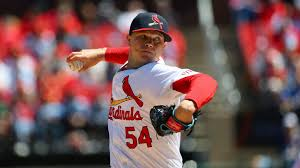
- The Rivalry Fuel: The quote is instant bulletin board material and the exact kind of high-profile friction the rivalry has been missing, adding a layer of personal animosity to the 2026 matchups.
- The Contradiction: When the Yankees first acquired Gray in 2017, he publicly said he “couldn’t be happier” to join the team. His current comments are a stark reversal, leading many Yankees fans and media to label him as a “whiner” who couldn’t handle the pressure of the New York market.
- The Real Cause of the Struggle: Gray’s former Yankees teammates, like catcher Erik Kratz, have jumped into the debate, arguing that Gray’s failure was due to a “contradiction of pitch usage” with then-pitching coach Larry Rothschild. Gray was reportedly forced to use his slider more often, abandoning his trusted curveball, which destroyed his confidence and effectiveness.
- The Split Stats: The numbers back up Gray’s discomfort in the Bronx: During his time with the Yankees, he posted a brutal 7.71 ERA at Yankee Stadium compared to a solid 3.62 ERA on the road.
Gray is clearly ready to leverage this rivalry to fuel his performance in Boston, aiming to prove that his lack of success in New York was an organizational failure, not a lack of talent.